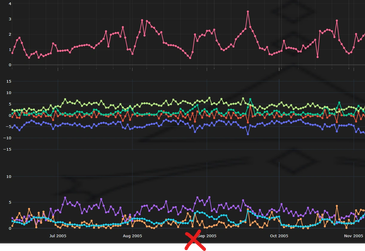
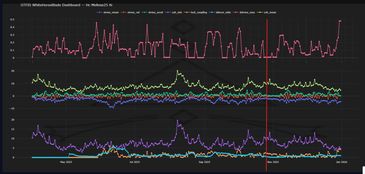
In NCOD—nonlinear coupled oscillatory dynamics—terms, HCV15 reads hurricane development as a changing phase relationship among interacting oscillatory components:
Loading mountain → energy and stress accumulate across coupled modes. Ordered descent → the system becomes increasingly phase-organized and moves toward a narrower state space
In NCOD—nonlinear coupled oscillatory dynamics—terms, HCV15 reads hurricane development as a changing phase relationship among interacting oscillatory components:
Loading mountain → energy and stress accumulate across coupled modes. Ordered descent → the system becomes increasingly phase-organized and moves toward a narrower state space. Low gate / deep compression → available degrees of freedom contract and the system approaches a critical transition boundary. Kinetic reopening / transfer burst → coupling reorganizes, phase slips occur, and stored energy transfers rapidly between modes. Impact-stage expression → the system crosses a threshold into a new macroscopic regime: formation, intensification, or landfall expression. Basin persistence → the altered state remains dynamically supported through hysteresis and continued coupling. Reorganization → the system relaxes, redistributes energy, or settles into a new attractor.
In one sentence:
HCV15 operationalizes NCOD by tracking how a coupled nonlinear system loads, synchronizes, compresses, transfers energy, crosses a regime boundary, persists, and reorganizes.
We use cookies to analyze website traffic and optimize your website experience. By accepting our use of cookies, your data will be aggregated with all other user data.